
Crypto Trading and Investment: The Good, The Bad and The Ugly

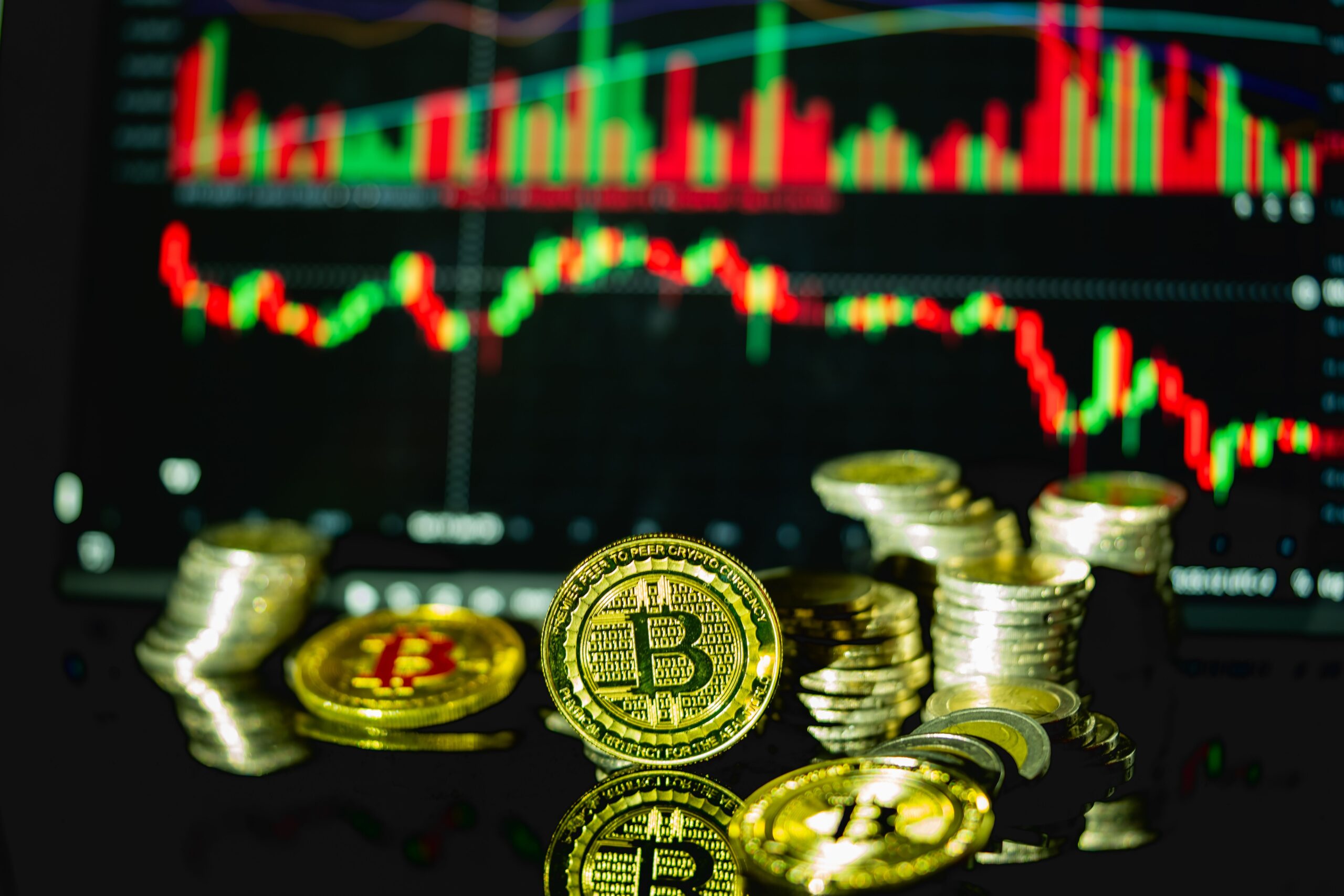
Cryptocurrency has developed from a relatively unfamiliar digital experiment into a major financial market followed by individual investors, professional traders, technology companies and financial institutions. Bitcoin, Ethereum and thousands of other crypto assets can now be bought, sold, transferred and traded through a wide range of platforms. At the same time, the rapid growth of the market has created an important distinction between understanding cryptocurrency and simply buying a coin because its price is rising. A proper crypto trading and investment review needs to look beyond price charts and social-media predictions. Cryptocurrency trading involves understanding market structure, order types, volatility, liquidity, fees, risk management and trading psychology. Crypto investing involves a different set of questions, including what an asset is designed to do, how its network works, how it is secured, what creates demand for it and what could cause its value to decline.
Regulators continue to classify direct crypto investment as high risk. The UK’s Financial Conduct Authority, for example, states that crypto assets are speculative and that investors should be prepared to lose all the money they invest. The U.S. Securities and Exchange Commission’s investor guidance similarly warns that crypto asset investments can be exceptionally volatile and that significant losses are possible. That does not mean every cryptocurrency or every trading strategy behaves in exactly the same way. It means that anyone entering the market needs to understand what they are actually doing before committing capital. The difference between a disciplined crypto investor and an inexperienced market participant is often not the ability to predict the next price movement, but the ability to manage uncertainty.
What Is Crypto Trading and How Does Cryptocurrency Investing Work?
Crypto trading is the buying and selling of cryptocurrency with the intention of benefiting from changes in market price. A trader may purchase Bitcoin at one price and sell it later at a higher price, or use certain derivatives to speculate on a decline. Trading can take place over minutes, hours, days or weeks depending on the strategy. Crypto investing generally refers to acquiring cryptocurrency with a longer-term objective. Instead of attempting to profit from frequent price movements, an investor may buy an asset because they believe its network, technology, adoption or long-term utility could support its value over an extended period. These two activities are frequently confused because they use the same underlying assets. Someone purchasing Bitcoin and holding it for several years is approaching the market differently from someone opening several Bitcoin positions in a single day.
The first major distinction is time horizon. A short-term trader is concerned with market structure, momentum, liquidity, volatility and specific entry and exit levels. A long-term investor may be more concerned with adoption, network activity, technological development, token economics, competition and the broader role of the asset. The second distinction is decision-making. A trader normally needs a defined trading setup. For example, the trader might wait for a price breakout, a trend reversal or a particular technical pattern before entering a position. An investor may instead establish a long-term allocation and periodically purchase an asset without attempting to predict every short-term price movement. The third distinction is transaction frequency. Frequent trading can create more fees and more opportunities for mistakes. Long-term investing may involve fewer transactions, although it still requires portfolio monitoring and periodic reassessment.
The cryptocurrency market itself contains several categories of assets. Bitcoin is generally associated with decentralized digital money and a limited supply model. Ethereum supports a programmable blockchain that can be used for decentralized applications and smart contracts. Stablecoins are designed to maintain relatively stable values against reference assets such as the U.S. dollar, although the mechanisms and risks behind different stablecoins vary. Other tokens can represent governance rights, utility within a particular network or exposure to specific blockchain ecosystems. This variety makes the phrase “crypto market” somewhat misleading. Buying a major established cryptocurrency is not economically identical to buying a newly launched token with limited liquidity, concentrated ownership or an unproven use case. Before buying any cryptocurrency, investors should therefore answer several basic questions: What problem does the project attempt to solve? Who uses it? How does the network generate demand? What gives the token value? How is supply created or destroyed? Who controls important parts of the ecosystem? What are the principal competitors? What happens if adoption fails to grow?
These questions are more useful than simply asking whether a coin has recently gone up. Crypto exchanges provide the infrastructure through which many individuals access the market. On a typical exchange, users can deposit fiat currency or cryptocurrency and place orders against available trading pairs. Common order types include market orders, limit orders and stop-related orders. Spot trading involves purchasing or selling the underlying asset rather than taking a leveraged derivatives position. Binance’s current educational material describes spot trading as the direct purchase or sale of an asset at the current market price and distinguishes it from futures and margin trading. The mechanics may appear simple, but the consequences of different order types can be significant. A market order prioritizes execution and accepts the available market price. A limit order specifies the maximum price a buyer is willing to pay or the minimum price a seller is willing to accept. During periods of rapid movement or low liquidity, the actual execution conditions can differ substantially from what an inexperienced trader expects.
Another important concept is the difference between a cryptocurrency’s market price and its underlying fundamentals. Price represents what buyers and sellers are willing to transact at a particular moment. It does not automatically prove that an asset is valuable, useful or sustainable. Markets can remain disconnected from fundamental expectations for long periods. This is particularly important in crypto because sentiment can move quickly. News about regulation, exchange failures, technological upgrades, institutional activity, security incidents, macroeconomic conditions or influential public statements can cause significant price changes.
How to Start Crypto Trading Without Treating It Like Gambling
The first step in cryptocurrency trading should not be depositing money. It should be establishing a process. A beginner needs to determine whether the objective is short-term trading, medium-term speculation or long-term investing. Combining all three without clear rules can make it difficult to understand why a position was opened or when it should be closed. For someone learning crypto trading for beginners, spot trading is usually easier to understand than leveraged derivatives because the trader purchases the underlying cryptocurrency rather than borrowing exposure to a larger position. This does not make spot cryptocurrency risk-free; prices can still fall sharply and the entire investment can potentially lose substantial value.
The next step is selecting a reputable trading platform and understanding its terms. Traders should investigate available markets, trading fees, withdrawal fees, custody arrangements, security features, geographical restrictions and the regulatory status applicable to their location. Account security deserves particular attention. Cryptocurrency transactions can be difficult or impossible to reverse once completed. Strong passwords, two-factor authentication, withdrawal controls and careful protection of account credentials can reduce avoidable security risks. Users should also be cautious with links received through social media, messaging applications or unsolicited emails. Once an account is established, a beginner should learn the difference between a trading pair, market order, limit order, spread, liquidity, volume and slippage.
Liquidity refers broadly to how easily an asset can be bought or sold without significantly moving its price. Large cryptocurrencies usually have deeper markets than obscure tokens, although liquidity can change quickly during extreme market conditions.
Spread represents the difference between available buying and selling prices. A wider spread increases the effective cost of entering or exiting a position.
Slippage occurs when the executed price differs from the expected price. It can become particularly important when a trader uses large market orders or trades assets with limited liquidity.
These concepts explain why a trade that appears profitable on a chart can produce a smaller real-world return after transaction costs and execution differences. A trading plan should also define risk before the trade is opened. Instead of deciding how much to risk after entering a position, traders can determine their maximum acceptable loss beforehand. A stop-loss order may be used in some strategies to automatically close a position if price reaches a predetermined level, although stop orders cannot guarantee a specific execution price during extremely volatile conditions.
Position sizing is equally important. A trader does not need to put a large percentage of their account into every opportunity. In fact, reducing position size can make it easier to survive a sequence of unsuccessful trades without severely damaging the account. Suppose a trader has $1,000 available for speculative trading. Putting the entire amount into a single volatile asset creates a very different risk profile from allocating only a small portion to an individual trade while keeping the remainder outside that position. The objective is not to eliminate losing trades. No legitimate trading strategy can guarantee that. The objective is to ensure that an individual mistake does not become financially devastating.
Technical analysis can then be introduced as a decision-making framework. Traders commonly study support and resistance, trend direction, moving averages, trading volume, momentum indicators, candlestick structures and market highs and lows. Technical indicators should not be treated as prediction machines. A moving average does not know what the market will do tomorrow, and an indicator crossing a particular level does not guarantee a profitable trade. Technical analysis is better understood as a method for organizing information about price behavior and constructing repeatable trading rules. For example, a trader might decide to trade only when the broader trend is upward, volume confirms a breakout and the potential loss is smaller than the expected reward. Another trader might use a range-trading strategy, buying near established support and selling near resistance. Neither method guarantees success. The important part is that the trader knows the conditions under which the strategy is supposed to operate.
Keeping a trading journal can significantly improve the learning process. Each trade can record the date, asset, entry price, position size, reason for entering, planned exit, actual exit, result and emotional state. After dozens of trades, patterns may become visible. A trader might discover that most losses occur after entering late, trading during high-volatility news events or increasing position size after a previous loss. This is where crypto trading becomes different from simply watching charts. The market provides the price, but the trader is responsible for the process.
Crypto Investment Strategies: Long-Term Holding, Dollar-Cost Averaging and Portfolio Management
Long-term cryptocurrency investing requires a different mindset from active trading. One of the simplest approaches is buy and hold, where an investor purchases an asset and maintains the position for an extended period. The logic is based on the belief that the asset or network could appreciate over time despite short-term volatility. However, buying and holding does not mean buying without research. An investor still needs to understand the asset’s purpose, supply structure, technological risks, competition and market adoption. Another commonly discussed strategy is dollar-cost averaging, or DCA. Under a DCA approach, an investor invests a predetermined amount at regular intervals instead of attempting to identify a perfect entry point. For example, someone might allocate the same amount every week or month.
The major advantage of this method is process discipline. The investor does not need to decide whether today’s price is the exact bottom. Purchases occur according to a predetermined schedule. However, DCA does not guarantee a profit, eliminate volatility or protect an investor from a prolonged decline. Portfolio diversification is another important concept. Holding several cryptocurrencies does not automatically create effective diversification because different assets can experience strong correlations during market-wide selloffs. A portfolio might contain Bitcoin, Ethereum, stablecoins and smaller digital assets, but the investor should understand why each asset is present and what risk it introduces. For example, a smaller cryptocurrency may provide exposure to a particular blockchain ecosystem but could also have considerably lower liquidity and greater price volatility. A stablecoin may have a different risk profile from Bitcoin, including risks associated with the issuer, reserves, redemption mechanisms or the platform through which it is held.
Investors should also distinguish between asset diversification and platform diversification. Holding different cryptocurrencies on one platform does not remove the risk that the platform itself could experience technical, financial, regulatory or operational problems. The SEC has warned that investors using crypto asset entities may face risks involving platform failure, withdrawal suspensions, hacking, technical problems and uncertain recovery of assets in certain circumstances. Another major consideration is custody. Cryptocurrency can be held through an exchange, a custodial service or a personal wallet. Each arrangement involves different responsibilities and risks. Exchange custody can be convenient because the platform manages many technical aspects of access and trading. The trade-off is dependence on the platform.
Self-custody gives the user greater direct control over private keys, but that control creates responsibility. Losing a recovery phrase or private key can result in permanent loss of access. Sending cryptocurrency to an incorrect address can also create serious problems because blockchain transactions are generally not reversible through a conventional bank-style chargeback process. Investment decisions should therefore consider not only market risk but also operational risk. Another important area is tokenomics. Investors should examine total supply, circulating supply, issuance schedule, token unlocks, staking arrangements and concentration of ownership.
A cryptocurrency may appear inexpensive because one token costs only a few cents. That price alone says very little. The more relevant question is the project’s total valuation relative to its circulating and potential future supply. A token with a very large supply can have a low individual unit price while representing a substantial total market value. Conversely, a high-priced coin does not necessarily mean it is “too expensive.” Unit price and total market capitalization are separate concepts. Investors should also examine token unlock schedules. If a large quantity of previously restricted tokens is scheduled to enter circulation, additional selling pressure may affect the market. This does not guarantee a price decline, but it is a factor worth understanding. Research should extend beyond promotional material. Project websites, technical documentation, blockchain explorers, developer activity, governance structures, financial disclosures where available and independent research can provide additional context.
Social media can be useful for discovering information quickly, but it is a poor substitute for verification. The FCA specifically warns consumers about crypto investment scams promoted through social media, including schemes using professional-looking websites, fabricated returns and pressure to invest quickly. The same principle applies to influencers. A person with a large following may understand cryptocurrency extremely well, may understand it poorly, or may have a financial relationship with a project. The size of an audience is not evidence of investment expertise.
Crypto Futures, Margin Trading and Leverage Explained
One of the most important distinctions in a crypto trading review is the difference between spot trading and derivatives. Spot trading involves buying or selling the underlying cryptocurrency. Futures trading involves contracts whose value is linked to the underlying asset. Perpetual contracts are a common form of crypto derivative and are designed to remain open without the traditional fixed expiration structure of many futures contracts. Derivatives can be used for hedging, speculation and other trading strategies, but they introduce additional complexity.
The most significant issue for inexperienced traders is leverage. Leverage allows a trader to control a position larger than the amount of capital deposited as collateral. If a trader deposits $100 and uses 10x leverage, they may obtain exposure equivalent to approximately $1,000, depending on the platform and contract mechanics. This sounds attractive because a small price movement can produce a large percentage gain relative to the trader’s initial collateral. The same mechanism works in reverse: a relatively small adverse price movement can create a substantial loss. Binance’s current educational material explains that leverage can amplify both profits and losses and that high leverage can cause liquidation from relatively small market movements.
Liquidation is one of the biggest dangers of leveraged crypto trading. If a position’s losses become large enough relative to the available collateral, the platform may automatically close the position. This creates an important difference between investing in an unleveraged asset and trading a leveraged derivative. An investor holding a cryptocurrency can potentially wait through a temporary decline if the asset remains supported and the investor’s thesis has not changed. A leveraged trader may not have that option because the position can be liquidated before the market has an opportunity to recover. Leverage also introduces funding and borrowing costs depending on the product. These costs can gradually reduce returns even if the underlying price moves in the anticipated direction.
For beginners, the appeal of leverage often comes from the possibility of making money faster. That is precisely why it requires caution. A larger position does not create a better trading opportunity; it simply increases exposure. A trader using futures should understand initial margin, maintenance margin, liquidation price, funding rates, mark price, isolated margin and cross margin before opening a position.
Isolated margin generally limits the collateral assigned to an individual position, while cross margin can use a broader pool of available collateral to support positions. The exact mechanics vary between platforms, so traders should read the relevant platform documentation rather than assuming every exchange operates identically. Short selling is another feature of derivatives markets. Instead of attempting to profit from a price increase, a trader opens a position designed to benefit from a price decline. This can be useful for hedging or speculation but introduces its own risks. A short position can experience rapidly increasing losses if the underlying asset rises substantially.
The FCA has previously highlighted the extreme volatility and risks associated with crypto derivatives and has restricted the sale of certain crypto derivatives to retail consumers in the UK. Rules differ between jurisdictions, so traders should check the regulations applicable to their location and the specific product they intend to use. For someone learning cryptocurrency markets, there is little reason to begin with the most complicated product available. Understanding spot markets, order execution and risk management first provides a stronger foundation for evaluating derivatives later.
How to Review a Crypto Investment Before Putting Money Into It
A proper crypto investment review should examine the asset from several angles instead of relying on its recent price performance. Start with the project’s purpose. What does the cryptocurrency actually do? Is it used for payments, smart contracts, decentralized applications, governance, data storage, decentralized finance or another function? If the project disappeared tomorrow, what practical service would users lose? Next, investigate the technology. Read the project’s documentation and understand whether the blockchain is actually operational. Look at transaction activity, network development, security mechanisms and the people or organizations responsible for maintaining important infrastructure.
Then examine adoption. A cryptocurrency can have impressive marketing but limited real-world usage. Look for evidence of users, transactions, developers, applications, partnerships and ecosystem activity rather than relying exclusively on announcements. Token economics should receive equal attention. Check circulating supply, maximum supply where applicable, issuance, inflation, token burns, vesting arrangements and upcoming unlocks. Examine whether a small number of wallets control a large portion of the circulating supply. Concentration does not automatically mean an asset will fall, but it can create additional market and governance risks. Liquidity should also be considered. An asset that trades with low volume may be difficult to sell during market stress. A chart can show a significant percentage gain while hiding the fact that relatively little capital actually changed hands.
Investors should then examine the team and governance structure. Is the development team publicly identifiable? Is the project open source? How are major decisions made? Can developers alter important protocol parameters? Are there mechanisms for community participation? Does a foundation, company or small group retain substantial control? Regulatory and legal considerations are also increasingly important. Cryptocurrency rules differ significantly between countries and can change over time. The fact that a platform or token is accessible online does not necessarily mean it is authorized or protected in the user’s jurisdiction.
Finally, investigate the people promoting the investment. Promises of guaranteed returns, secret trading systems, guaranteed daily profits or urgent investment opportunities should be treated as major warning signs. The FCA specifically warns consumers to be cautious about unsolicited contact, pressure to invest quickly and promises of unrealistic returns. A legitimate investment does not need to rely on artificial urgency. Another useful practice is to calculate the downside before calculating the potential upside. If an investment falls 50%, how much would the portfolio lose? If it falls 80%, would the investor still be financially comfortable? If the exchange becomes temporarily unavailable, does the investor have an appropriate plan? If a token becomes illiquid, could it actually be sold at the displayed market price?
These questions force attention away from hypothetical profits and toward actual financial exposure. Crypto investors should also understand that past performance is not a reliable guarantee of future performance. A cryptocurrency that previously increased by 1,000% can still experience a major decline. Historical charts show what happened; they do not establish what will happen next.
A disciplined investor can therefore build a checklist around five areas: technology, adoption, tokenomics, market structure and risk.
Technology asks whether the network works.
Adoption asks whether people actually use it.
Tokenomics asks how supply and ownership affect the asset.
Market structure asks whether the asset can be traded efficiently.
Risk asks what could cause permanent or temporary capital loss.
The final component is portfolio management.
Rather than treating every cryptocurrency as an opportunity that must be purchased, investors can establish rules for how much capital they are willing to expose to speculative assets, how frequently they will review positions and what circumstances would cause them to reduce or close an investment. Crypto markets operate continuously, which can encourage excessive monitoring. Watching prices every few minutes can make ordinary volatility appear more significant than it is and can encourage emotional decisions.
A written investment plan can reduce that pressure. It can state the reason for buying, intended holding period, acceptable risk, position size, circumstances that would invalidate the investment thesis and rules for taking profits or reducing exposure. This approach does not make cryptocurrency predictable. It makes the investor’s behavior more deliberate. Cryptocurrency remains a rapidly developing market with significant opportunities as well as substantial risks. The technology behind digital assets can support new forms of payments, programmable financial systems and decentralized applications, but those possibilities do not mean every token will succeed or every trading strategy will produce positive returns.
The most useful way to approach crypto trading and investment is to separate the technology from the speculation, the market opportunity from the marketing, and the potential return from the actual risk being accepted. Anyone considering cryptocurrency should understand that the possibility of significant gains comes with the possibility of significant losses. The SEC and FCA both emphasize the speculative and volatile nature of crypto-related investments, while also highlighting risks involving platforms, security, regulation and investor protection.
For traders, the central discipline is controlling exposure and following a defined process rather than attempting to predict every market movement. For investors, it is understanding what they own, why they own it and what could permanently impair its value. That distinction is what turns cryptocurrency from a collection of rapidly moving price charts into a market that can be analyzed systematically.
